
Crochet Flower Crochet Sunflower Bouquet
There is something about a sunflower that instantly lifts a room. Bright, bold, and full of warmth, these cheerful blooms have a way of bringing sunshine into any space. When you translate that energy into yarn, you get a crochet flower arrangement that radiates happiness every time you look at it. A crochet sunflower bouquet is a wonderful project whether you are just starting out or looking for a satisfying new challenge. Each flower is lightweight, long lasting, and carries the kind of golden warmth that fresh sunflowers simply cannot match.
I have always been fascinated by how yarn can mimic the texture and shape of real petals. The way a tightly worked crochet petal curls and folds gives the flower a natural, organic feel that is surprisingly lifelike. A sunflower bouquet takes that idea and runs with it, giving you the chance to experiment with warm yellows, rich browns, and deep greens. The result is a cheerful arrangement that looks right at home on a dining table, a bookshelf, or a sunny windowsill.

Why a Crochet Sunflower Bouquet Makes a Wonderful Project
Sunflowers are one of the most forgiving flowers to recreate in yarn. Their large, open faces and relatively simple petal structure make them accessible even for beginners, while experienced crocheters can add intricate details like textured centers, layered petals, and realistic leaf veins. A crochet flower sunflower bouquet is also incredibly versatile. You can make a small arrangement for a tabletop display or a grand statement piece for a special occasion.
Unlike fresh sunflowers, which last only a week or two, your yarn bouquet will hold its shape and color for years. It will not need water, it will not droop, and it will not attract pollen. For anyone who loves the look of sunflowers but deals with allergies or a short growing season, a handmade crochet arrangement is the perfect workaround. Plus, making your own bouquet gives you complete control over size, color, and style.
Choosing the Right Yarn and Hook for Sunflowers
The materials you choose play a big role in how realistic your sunflower bouquet turns out. For the main petals, I recommend a medium weight yarn, often labeled as worsted weight or category four. This thickness gives you enough body to shape each petal convincingly while still being easy to work with on a standard hook. Cotton yarn holds its shape beautifully and has a slight stiffness that mimics the structure of real sunflower petals.
For the sunflower centers, a slightly heavier or textured yarn can add that fuzzy, seed-filled look that makes sunflowers so distinctive. Bouclé, eyelash yarn, or even a simple wool blend works wonderfully for this. Acrylic yarn is also a solid choice if you want a wider color palette and a more budget friendly option. The key is to select yarns with enough body to hold their shape once blocked.
Hook size depends on your yarn weight, but a size H or I hook is a reliable starting point for medium weight yarn. This creates a fabric that is dense enough to support the structure of a sunflower without being so tight that the petals lose their gentle curve. If your stitches are too loose, the petals may flop and fail to hold their shape. If they are too tight, the flower could look stiff and unnatural. A loose gauge swatch before you begin can save you a lot of frustration.
Color Palette Ideas for Your Sunflower Bouquet
Sunflowers come in a range of warm tones, and you can draw inspiration from nature or go bold with unexpected color combinations. Here are some palettes that work beautifully for sunflower arrangements:
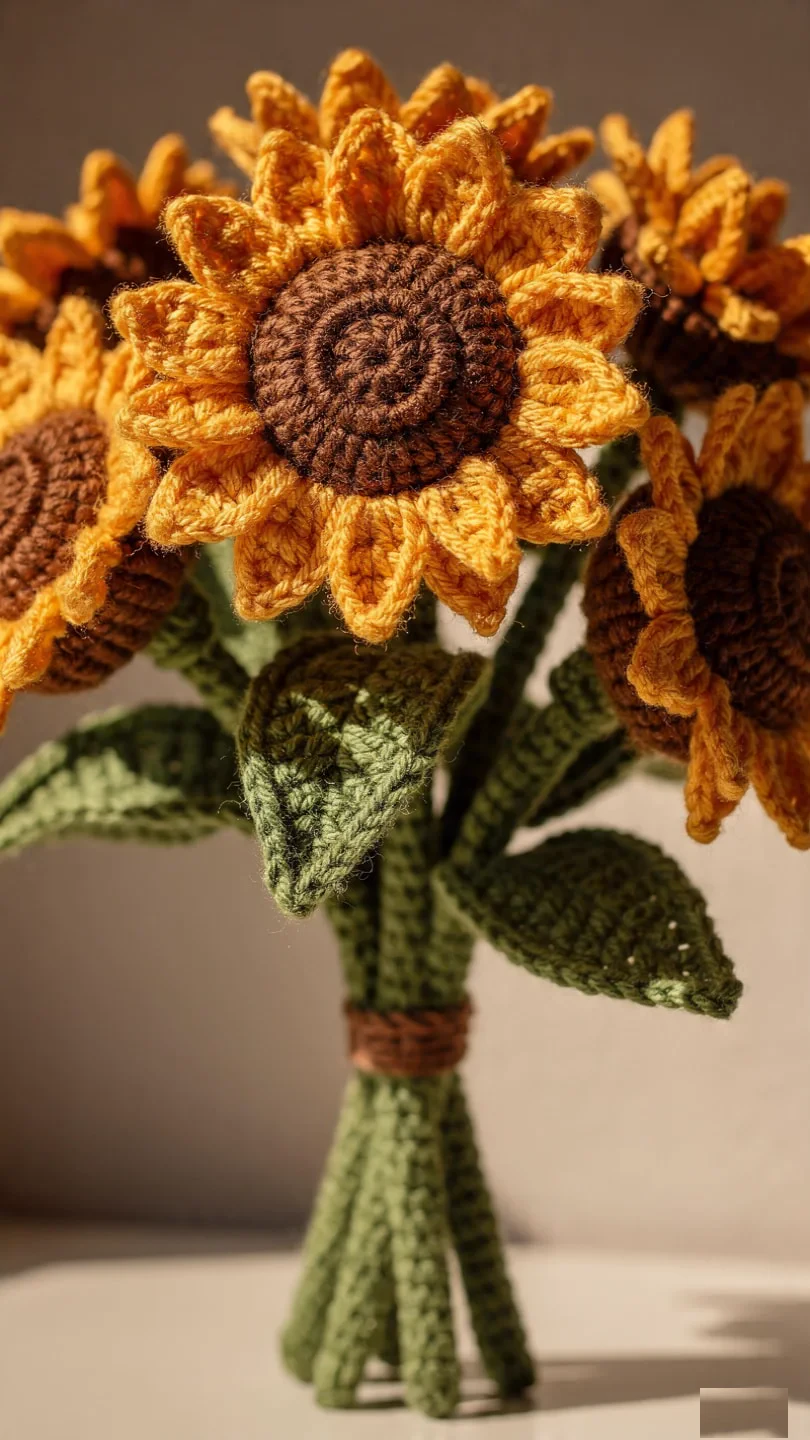
- Deep gold and bright yellow petals with a dark brown center for a classic sunflower look
- Lemon yellow and cream petals with a green center for a softer, more delicate version
- Burnt orange and amber tones for a fall-inspired sunflower arrangement
- Mixed yellows, golds, and warm oranges for a vibrant, eclectic bouquet
- Pale buttery yellow with hints of apricot for a pastel, garden-inspired feel
Do not feel limited to traditional sunflower colors. Some of the most striking arrangements come from unexpected twists on a familiar flower. Try adding a touch of rust or coral to the petals, or choose a green center instead of brown for a more contemporary look.

Basic Techniques for Crocheting Sunflower Flowers
If you have been crocheting for a while, you already have most of the skills needed to make sunflowers. The basic technique involves working in tight spirals or circles, increasing stitches to create the curved shape of each petal, and then joining the petals together to form a finished bloom. Each sunflower typically starts with a foundation circle, and you work outward by increasing stitches around the edge to create the rounded petal shape.
The petals of a sunflower are larger and flatter than rose petals, which makes them slightly easier to shape. You will usually work several petal shapes separately and then attach them to a central base. Each petal begins with a chain, works into a cluster of double crochets or treble crochets, and finishes with a decrease that creates a gentle fold. When you gather five to seven petals and join them at the center, the sunflower begins to take shape.
Stuffing each petal lightly before joining them adds a three-dimensional quality that makes the finished sunflower look more realistic. A small amount of fiberfill pushed into each petal gives it a soft, rounded curve that mimics the way real sunflower petals overlap and fan outward. The center of the sunflower can be worked tightly with a textured yarn to create that characteristic fuzzy, seed-filled look.
Working with Leaves and Filler Flowers
No sunflower bouquet is complete without leaves. Crochet leaves in varying sizes using a simple oval shape worked in double crochet, and add vein details with a yarn needle and contrasting yarn. Green is the obvious choice, but you can also try leaves in sage, olive, or even a muted teal for a more unique arrangement. Small filler flowers like daisy-like buds or simple round blossoms can fill in gaps and add visual interest between the larger sunflower blooms.
If you enjoy working with amigurumi techniques, you may appreciate how similar the shaping principles are to creating small stuffed figures. For those who want to explore more of that style, I have written about a Crochet Amigurumi project that covers many of the same shaping and stuffing techniques used in flower work.
Arranging Your Crochet Sunflower Bouquet
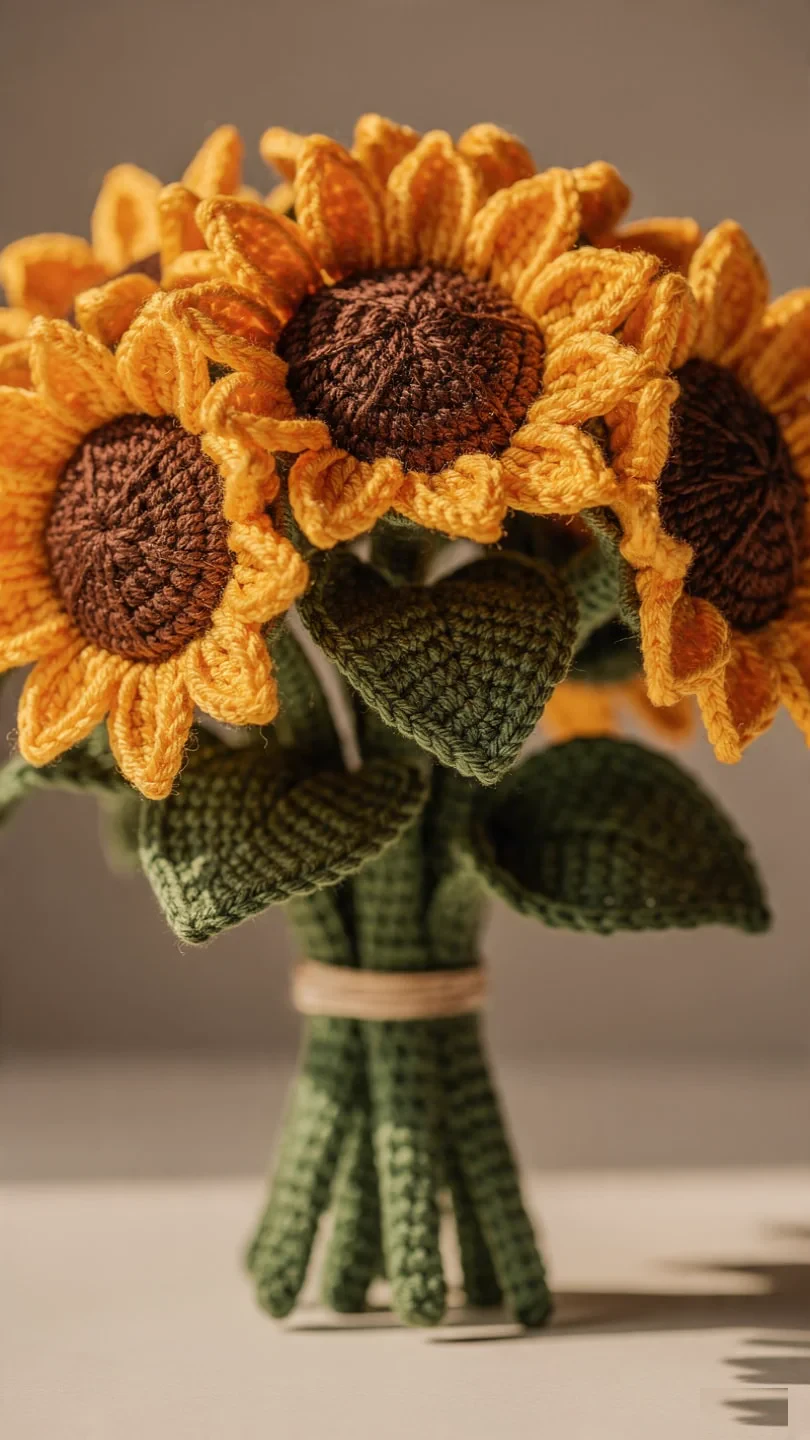
Once you have crocheted enough sunflowers, leaves, and filler flowers, the fun part begins: arranging them into a bouquet. There is no single right way to do this, but a few tips can help you create a visually pleasing arrangement that looks natural and balanced.
Start by selecting a focal point. In a sunflower bouquet, the largest blooms should sit at the center or slightly off center, with smaller flowers arranged around them at varying angles. Sunflowers have a tendency to face upward and outward, so positioning them at slightly different heights creates a dynamic, garden-like feel rather than a rigid, symmetrical look.
Leaves are essential for making the arrangement look complete. Position them between the flowers to create depth and cover any visible joining points. You can attach them to floral wire, a dowel, a decorative pot, or a wreath form depending on how you plan to display your bouquet. If you are making a wreath-style arrangement, think of the circle as a clock face and place your larger sunflowers at the three, seven, and eleven o'clock positions, filling in with smaller blooms and leaves.
Caring for Your Crochet Sunflower Bouquet
One of the best things about crochet flowers is how little maintenance they require. Unlike fresh sunflowers that need water and sunlight, your yarn blooms simply need a little dusting now and then. A soft brush or a clean, dry cloth is usually enough to keep them looking fresh.
Avoid placing your arrangement in direct sunlight for extended periods, as intense light can gradually fade lighter yellow yarn colors over time. If dust accumulates in the tight creases of your sunflower centers, use a low-setting hairdryer on a cool breeze to gently blow it out. Storing the bouquet in a dry, cool place when it is not on display will help preserve both the colors and the shape of the flowers for years to come.
Making a Crochet Sunflower Bouquet as a Gift
A handmade crochet sunflower bouquet makes one of the most thoughtful gifts you can give. Sunflowers symbolize happiness, warmth, and gratitude, and a yarn version carries those sentiments in a form that lasts far longer than a fresh bunch. Whether it is for a birthday, a graduation, a housewarming, or simply to brighten someone's day, a crochet sunflower bouquet brings a smile that keeps on giving.
You can personalize the arrangement by choosing the recipient's favorite colors or by adding a small embroidered message on a felt base or wooden tag. I have seen crocheters add tiny painted messages to the leaves of their arrangements, and the results are always charming. For a more polished look, consider displaying your bouquet in a decorative pot, wrapping the base with ribbon or twine, or attaching a handmade gift card.
If you are looking for more inspiration for gift-ready arrangements, my earlier post about a Crochet Flower Bouquet goes into more detail about creating thoughtful arrangements with personalized touches.
Getting Started on Your Own Crochet Sunflower Bouquet
The most important step is simply beginning. You do not need to be an expert crocheter to make a beautiful sunflower bouquet. If you can work a single crochet, a double crochet, and a chain stitch, you already have the foundation skills needed to create stunning yarn flowers.
Start small by making one or two sunflowers and see how the process feels. Once you are comfortable with the petal shaping and joining technique, you can increase the size of your bouquet or experiment with different color combinations. The more you practice, the more confident you will become with tension control, petal shaping, and arrangement design.
A crochet sunflower bouquet is a project that grows with your skills. What begins as a simple exercise in shaping petals can evolve into a complex, multi-textured arrangement that becomes a cherished piece of home decor or a gift that someone treasures for years. Grab your yarn, pick your brightest yellows, and let your imagination guide you. Every golden bloom you create brings a little more sunshine into the world, and there is no wrong way to bring the joy of crochet flowers into your home.